The Machine Knows You Better Than Your Mates Do: Inside the AI Driving Australia's Online Casinos
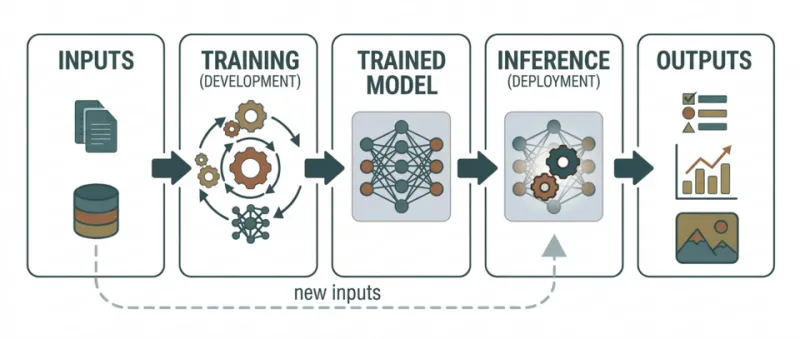
Photo: Generated and edited with Genspark (Nano Banana 2); prompt drafted with assistance from ChatGPT 5.2, Public domain, via Wikimedia Commons
You've just wrapped up a session on a high-volatility pokie, walked away empty-handed, and told yourself you're done for the night. Then a notification pops up — a free spin offer on a game that looks suspiciously like exactly what you were in the mood for. You click it. Of course you do.
That moment didn't happen by accident. It was engineered.
Australian online casinos are running some of the most sophisticated personalisation engines outside of Silicon Valley, and most players have absolutely no idea. These systems aren't just tracking what games you play — they're building a psychological profile of you in real time, adjusting offers, game sequences, and even lobby layouts based on patterns you've never consciously noticed in yourself.
What the Algorithm Actually Sees
When you log into an online casino, the data collection starts immediately. Session time, device type, the order in which you browse games, how long you hover on a title before clicking — it all gets fed into a model that's constantly updating its picture of who you are as a player.
Machine learning systems used by major platforms segment players into behavioural clusters. These aren't broad categories like "high roller" or "casual punter." They're granular. The algorithm might identify you as someone who gravitates toward fast-paced slots after 9pm on weekdays, prefers games with free spin features over jackpots, and tends to top up their balance when they're down around the 30% mark. It knows this because it's seen thousands of players who behave like you, and it's learned what keeps that cluster engaged.
For Australian players specifically, platforms have noted some distinctive behavioural signatures. There's a strong cultural preference for fast gameplay with clear, immediate feedback — the kind of rhythm you get from a well-designed pokie rather than a slow-burn card game. The algorithm learns this quickly and serves accordingly.
The Recommendation Engine: More Netflix Than You'd Think
The game recommendation systems powering modern online casino lobbies work on principles that would feel familiar to anyone who's fallen down a Netflix rabbit hole at midnight. Collaborative filtering — the same technique that tells a streaming service you might enjoy a show based on what similar users watched — is used to surface games you haven't tried but are statistically likely to enjoy.
But casinos layer something extra on top: real-time volatility matching. If you've just had a dry run on a low-payout session, the system may nudge you toward a game with a higher hit frequency to restore your sense of momentum. Conversely, if you're on a winning streak, it might introduce a higher-variance title while your confidence is up. The sequencing isn't random — it's choreographed.
This is where the unpredictability that defines the best gaming experiences gets genuinely interesting. The wildcard element that keeps Aussie players coming back isn't purely chance — it's chance that's been carefully framed by a system that understands your tolerance for risk better than you do.
Timing Is Everything
Perhaps the most underappreciated dimension of casino AI is temporal targeting. These platforms don't just know what you like — they know when you're most susceptible to re-engagement.
Push notifications and promotional emails aren't sent on a fixed schedule. They're triggered by behavioural signals: how long it's been since your last session, what day of the week you typically play, and even how your recent sessions ended. A player who logged off after a near-miss is a very different re-engagement target than someone who cashed out on a high.
For Australian players, this intersects with some distinctly local rhythms. Long weekends, AFL finals weekends, the summer holiday stretch — these periods show measurable spikes in online casino activity, and the algorithms are calibrated to anticipate and capitalise on them. The system isn't just reactive; it's predictive.
The Cat-and-Mouse Game
Some players are aware, at least vaguely, that they're being profiled — and they push back. Deliberately varying session times, switching between game categories, ignoring recommendations. It's a kind of low-stakes adversarial relationship with the machine.
The problem is that the algorithm is playing a much longer game. Even irregular behaviour is a signal. A player who suddenly changes their patterns after a losing streak is exhibiting a recognisable pattern the model has seen before. The system adjusts.
This is the genuinely fascinating tension at the heart of modern online gambling: the more human and unpredictable you try to be, the more data you're generating for a system that's specifically designed to find patterns in unpredictability.
Does Personalisation Actually Change Outcomes?
Here's the honest answer: personalisation doesn't change the underlying odds of any game. The house edge on a pokie is what it is, regardless of whether the algorithm recommended it to you or you stumbled on it yourself. Random Number Generators operate independently of the recommendation layer entirely.
What personalisation does change is engagement duration and return frequency. Studies in behavioural economics consistently show that people stay longer and return more often when an environment feels tailored to them — whether that's a Spotify playlist or a casino lobby. The AI isn't rigging the game; it's rigging the experience.
For players who understand this distinction, it's actually a useful lens. The algorithm is your entertainment director, not your opponent. Treating it that way — enjoying the curation while maintaining your own session limits and budget discipline — is how you get the most out of a personalised platform without letting the machine run the show.
What's Coming Next
The next frontier for casino AI in Australia involves real-time emotional inference. Some platforms are already experimenting with systems that adjust pacing and visual stimulus intensity based on inferred arousal states — using session behaviour as a proxy for emotional engagement. It's still early days, but the direction is clear.
There's also a growing conversation in the industry about responsible gambling applications of the same technology. If an algorithm can identify a player who's likely to top up their balance after a loss, it can equally flag that player for a responsible gambling prompt. Some Australian-facing platforms are starting to build this into their compliance frameworks, using the same predictive power for harm minimisation as for engagement.
The machine is learning. The question for Australian players is whether they want to understand how it thinks — because that knowledge, more than any betting strategy, is probably the most useful card in your hand.