Your Postcode Is Showing: How Online Casinos Are Quietly Customising the Game for Every Corner of Australia
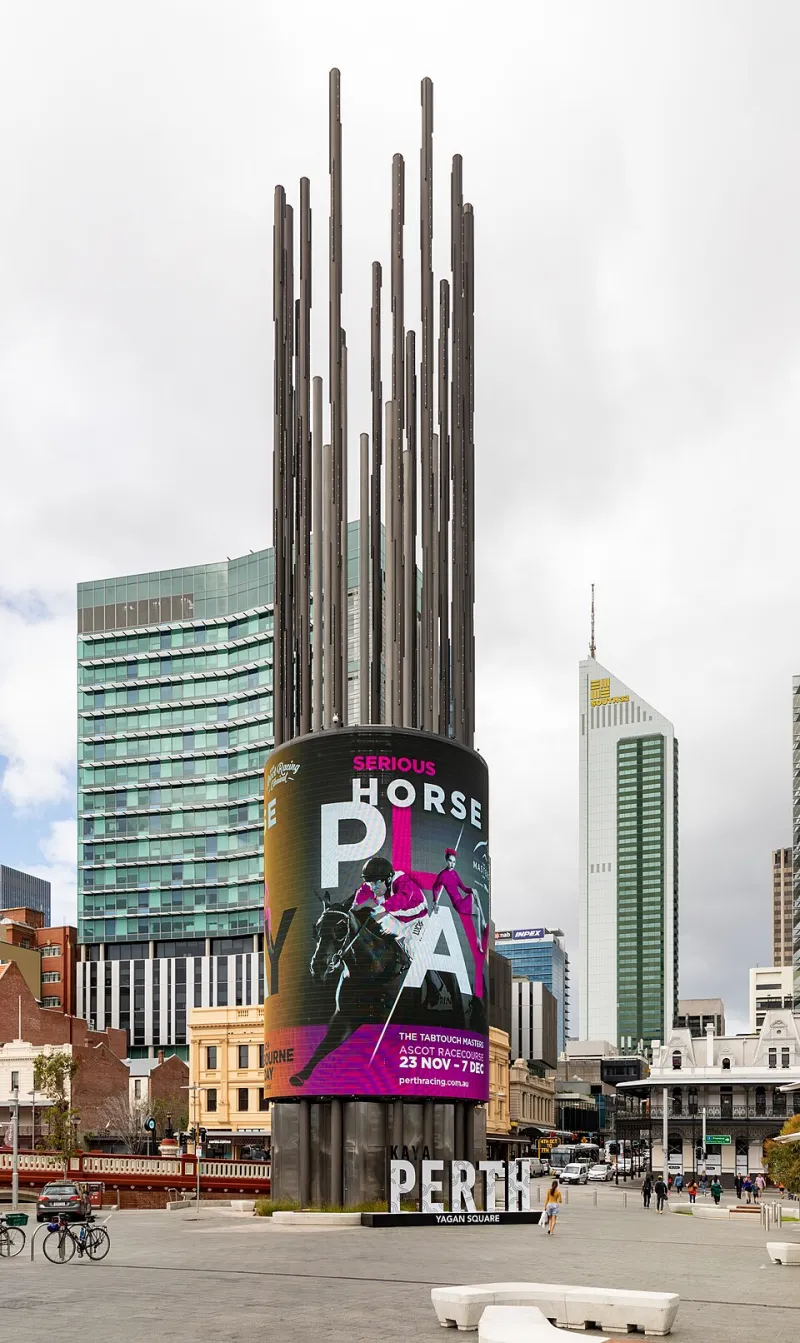
Photo: Dietmar Rabich, CC BY-SA 4.0, via Wikimedia Commons
Here's something to chew on next time you log into your favourite online casino: the experience you're getting probably isn't the same one your mate in a different state is getting. Not just a different result on the pokies — a genuinely different interface, different promotions, maybe even different games being pushed to the top of your lobby.
That's not a glitch. That's the algorithm doing exactly what it was built to do.
Australian online casino platforms have quietly moved into a new phase of personalisation, one that goes well beyond showing you games similar to ones you've played before. We're talking about region-specific customisation — using location data, demographic signals, and granular behavioural analytics to tailor the entire gambling experience to where you live and who you are.
I've spent time talking to people across the industry — platform operators, data analysts, and a few players who've started noticing the differences — and the picture that emerges is equal parts fascinating and worth scrutinising carefully.
The Death of the Default Lobby
Cast your mind back to early online casino platforms. You'd log in, see the same grid of games as every other player in the world, maybe filter by category, and pick something. The experience was flat, generic, and identical regardless of whether you were in Cairns or Canberra.
That era is effectively over for any platform operating at scale in Australia.
Modern casino platforms collect an enormous amount of regional data — not just your device location, but inferred demographic information, session timing, preferred game categories, average bet sizes, and response rates to different promotional formats. Stack that data across millions of sessions and you start to see patterns that are distinctly geographic.
Players in regional Queensland, for instance, tend to show different session timing patterns compared to inner-city Sydney users — longer individual sessions, higher preference for high-volatility slots, and stronger response to jackpot-focused promotions. Players in Perth show notably different live dealer preferences compared to Melbourne. These aren't stereotypes; they're statistically significant behavioural clusters that platforms are actively designing around.
"We don't think about 'the Australian player' anymore," one product manager at a mid-tier online casino platform told me, asking not to be named. "We think about cohorts. And geography is one of the strongest predictors of cohort behaviour we have."
Promotions That Know Where You Are
The most visible expression of this localisation is in promotional offers. If you've ever compared notes with friends about what bonuses they're being offered versus what's sitting in your inbox, you might have already noticed the discrepancy.
Platforms are increasingly deploying what the industry calls "geo-triggered" promotions — offers that activate based on your location, time zone, or regional event calendar. During the AFL finals, players in Victoria and South Australia might receive football-themed casino promotions that players in rugby-dominant Queensland never see. During the Sydney to Hobart yacht race, certain platforms ramp up live casino promotions specifically for New South Wales and Tasmanian player segments.
This isn't just about sport, either. Platforms are watching local event calendars, public holidays that vary by state, even local weather patterns (yes, really — session volumes spike during wet weather in tropical regions, and some platforms have started timing bonus drops to coincide with monsoon season in the Top End).
For the player, this can feel like a genuinely personalised experience — like the casino actually gets you. Which is, of course, precisely the intended effect.
Games Built for Specific Audiences
Beyond promotions, there's a more ambitious layer of localisation happening at the game level. Some studios developing content for the Australian market are now building regional variants of titles — same core mechanics, but with visual themes, sound design, and cultural references tuned to specific audience segments.
A slot built around outback imagery and country music might perform exceptionally in regional New South Wales and South Australia, while a surf culture-themed title with beachside aesthetics and indie Australiana sounds tracks better in coastal Queensland and WA. These aren't major overhauls — they're skins, essentially, wrapped around proven mechanics. But the impact on engagement metrics is measurable.
Some platforms have gone further, partnering with Australian content creators and local cultural touchstones to produce genuinely locally-flavoured games. Think titles themed around iconic Australian events, regional landmarks, or local sporting culture that would mean nothing to a player in the UK but land perfectly for someone in Townsville or Geelong.
The Wildcard in the Data
Here's where I'll offer a genuine opinion, because this trend deserves more than a neutral rundown.
The personalisation happening in Australian online casinos is technically impressive. The ability to serve genuinely relevant experiences to players based on who and where they are represents a real step forward from the generic, one-size-fits-all platforms of a decade ago. As a player, there's something that genuinely feels good about an experience that seems to understand your preferences.
But there's an uncomfortable flip side. The same data infrastructure that lets a platform show you a relevant promotion also lets it identify vulnerability patterns — players whose behaviour suggests financial stress, or who are showing signs of problematic gambling. The question of whether that data is being used to support those players or to further engage them is one the industry hasn't answered satisfactorily.
Regulation in this space is lagging behind the technology, as it tends to do. The Australian Communications and Media Authority and state-level gambling regulators are still largely working with frameworks built for a less sophisticated era of digital gambling. The hyper-personalisation arms race is outpacing the oversight capacity.
That's not an argument against personalisation itself. Done responsibly, with genuine harm minimisation baked into the algorithm alongside the engagement optimisation, this technology could actually help identify and support at-risk players better than any blunt instrument regulatory approach. Some platforms are genuinely investing in that dual-use of their data infrastructure.
But "some" isn't "all."
What It Means for You
If you're an Aussie player who enjoys the ride — and look, that's exactly the audience we're talking to here — the practical takeaway is fairly simple: the experience you're getting is increasingly personalised to you, and it's worth being aware of that.
The promotions in your inbox aren't random. The games being surfaced in your lobby aren't random. The timing of those bonus notifications isn't random. They're the output of systems that know quite a lot about how you play, when you play, and what's most likely to bring you back.
That's not inherently sinister — it's how most digital products work now, from streaming services to social media. But in a gambling context, where the stakes are financial, it's worth keeping that awareness front of mind.
Play because you enjoy it. Enjoy the wildcard nature of the games. Just know that behind the unpredictability of every spin, there's a very predictable set of data points building a picture of exactly who you are.