Touch Wood, Wear the Shirt: Inside the Strange Superstitions of Australia's Online Casino Players

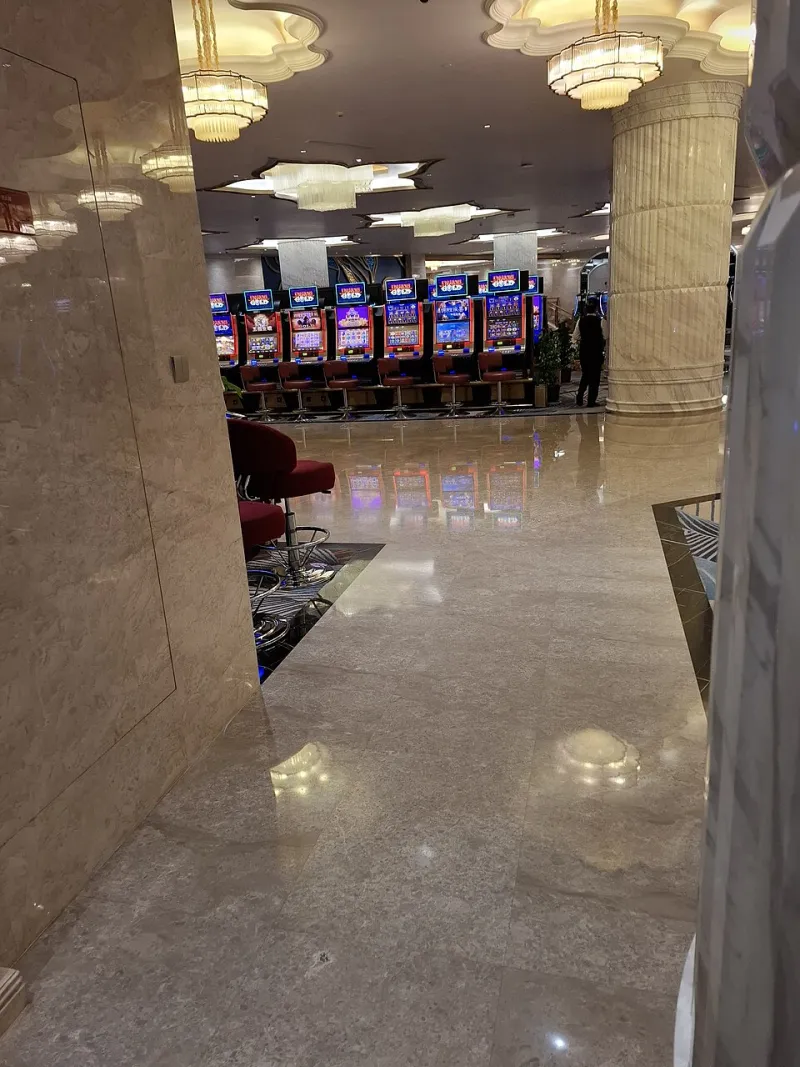
Photo: Jamen Percy, CC BY-SA 4.0, via Wikimedia Commons
Before Darren from Wollongong opens a single slot, he does three things: he makes a cup of tea he won't drink, he puts on his 2003 NRL grand final jersey, and he says the word "bananas" out loud. Not once. Three times. He's been doing this for four years. His win rate hasn't changed. He's never stopped.
"I know it doesn't do anything," he admits, laughing a little. "But the one time I didn't do it, I lost $200 in ten minutes. So now I do it every time."
Welcome to the weird, warm, deeply human world of Australian online casino superstitions—where logic goes out the window and the ritual becomes the whole point.
The Lucky Gear, the Forbidden Moves
If you think Darren's jersey is an outlier, think again. Across the country, Aussie players have developed elaborate personal codes around when, how, and in what state they'll sit down for a session.
Melbourne-based player Trish keeps what she calls a "lucky corner"—a specific spot on her couch with a particular cushion arrangement that she refuses to disturb on game nights. "My partner thinks I'm mental," she says cheerfully. "But I won $800 from that corner back in 2021 and I haven't moved since."
Then there's Josh from Brisbane, who will not—under any circumstances—start a session on a Tuesday. "I've just had consistently bad Tuesdays," he explains, with the gravity of someone describing a documented medical condition. "It's not worth the risk."
Clothing comes up constantly. Specific socks, unwashed hoodies, a lucky cap worn backwards. One player, who asked to remain anonymous, described rotating between three pairs of "game socks" based on what type of casino game they were planning to play. Slots get the blue ones. Table games get the grey. Anything involving live dealers gets the striped pair.
"I drew up the system myself," they said. "It just makes sense to me."
What the Experts Actually Think
Dr. Lena Park, a behavioural psychologist based in Sydney, has spent years studying how people construct meaning around random outcomes. She's not surprised by any of this.
"What we're seeing is a classic example of illusory control," she explains. "The human brain is wired to find patterns, especially in situations where the outcome actually matters to us. When you combine genuine uncertainty with emotional investment—which describes gambling pretty accurately—the brain goes into overdrive trying to identify what variables it can 'control'."
The process is reinforced by what psychologists call intermittent reinforcement. Because casino games don't reward you every time, the wins that do come feel disproportionately significant. If you happened to be wearing your old footy jersey when you hit a bonus round, your brain quietly files that away as a potential causal link.
"It's not stupidity," Dr. Park is careful to note. "It's actually a very sophisticated cognitive process. The problem is it's running on faulty data."
The Online Twist
Here's where things get interesting. Traditional casino superstitions—blowing on dice, not crossing your legs at the table—developed in physical spaces with tactile, social elements. Online casinos strip all of that away. There's no dealer to charm, no table to knock. So how do the rituals survive?
They adapt. And if anything, they get more personal.
Without the shared theatre of a physical casino floor, online players internalise their rituals entirely. The bedroom becomes the sacred space. The specific playlist becomes the pre-game ceremony. One player described always lighting the same scented candle—a specific brand of sandalwood from a chemist in Penrith—before any session worth taking seriously.
"It's about getting into the right headspace," she explains. "The candle tells my brain we're doing this properly now."
That framing—getting into the right headspace—might actually be the most honest description of what superstitions are doing. They're not changing the odds. But they might be changing the player's mental state, which has its own downstream effects on decision-making, patience, and how long someone plays before calling it a night.
Time of Day: The Biggest One
If there's one superstition that dominates the online space above all others, it's timing. The belief that certain hours of the day produce better results is almost universal among regular players.
Some swear by late nights—after midnight, when they're convinced the servers are "looser" or the competition is thinner. Others insist on early mornings before the "big players" get on. A surprising number of people believe that playing immediately after a server maintenance window gives an edge, citing vague theories about RNG resets.
None of this is supported by how random number generators actually work. RNGs in licensed online casinos operate on continuous, mathematically independent cycles. The time of day is genuinely irrelevant to the outcome of any spin or hand.
But tell that to someone who's won three times in a row at 1:17am on a Thursday.
"I know what I know," one player told us, with complete confidence.
Why We Keep Coming Back to the Ritual
Dr. Park points out something worth sitting with: superstitions aren't just about winning. They're about coping.
"Gambling involves accepting outcomes you can't control. That's inherently uncomfortable for most people. Rituals provide a sense of agency—even a false one—that makes the experience feel more manageable. They're a psychological buffer."
In that sense, the lucky sock isn't really about luck at all. It's about comfort. It's about having something to do with your hands, something to focus on, something that says: I prepared. I showed up properly. Whatever happens next, I did my part.
And honestly? In a game built entirely around unpredictability, that might be the most human response imaginable.
Darren from Wollongong is already planning his next session. The jersey is washed and ready. The tea will go cold. And somewhere in his lounge room, the word "bananas" is about to be said three times into an empty room.
We're not judging. We've all got our thing.